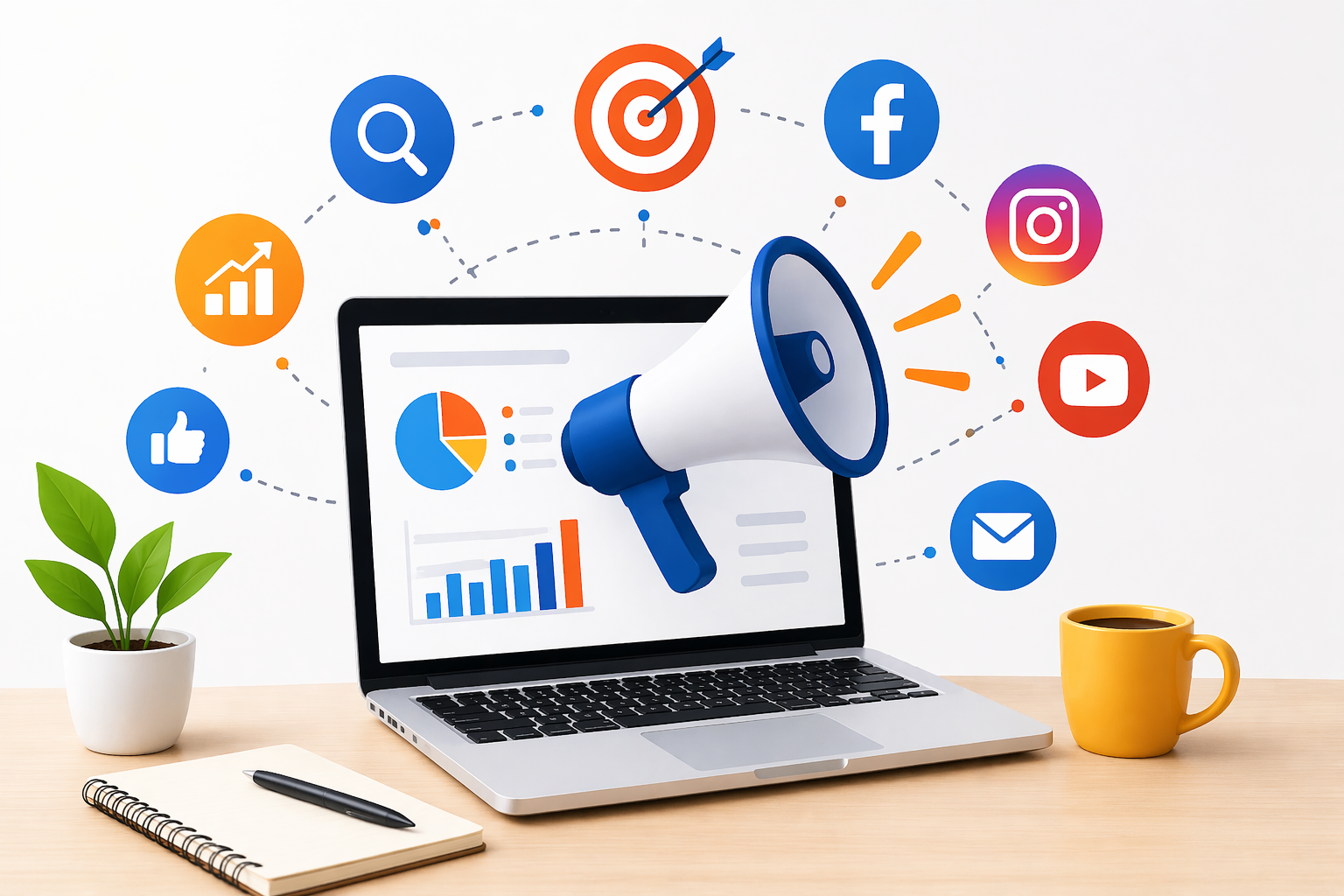
AI has rapidly evolved from a niche technology to a core tool in digital marketing. Its ability to analyze large datasets allows brands to understand audiences with precision. Marketers now rely on AI to optimize campaigns, predict trends, and generate content tailored to specific demographics. AI systems automate repetitive tasks, saving time while maintaining consistency and quality across channels. This shift enables businesses to focus more on strategy, creativity, and engagement rather than routine execution, fundamentally changing marketing workflows.
AI-powered tools can analyze customer behavior across multiple touchpoints, including social media, email, and websites. This analysis uncovers patterns and preferences, helping brands create highly targeted campaigns. By understanding individual interactions, AI enables marketers to deliver personalized experiences, boosting engagement and conversions. These insights are particularly valuable in fast-paced digital environments where consumer attention is limited, ensuring content is relevant, timely, and impactful. Businesses leveraging AI gain a competitive edge by making data-driven decisions that optimize content performance efficiently.
Moreover, AI in digital marketing enhances scalability. Small teams can produce content at volumes previously possible only with large teams. Automated content generation, combined with analytics, allows for rapid iteration and improvement. This reduces human error, streamlines processes, and ensures messaging aligns with brand voice consistently. As AI models become more sophisticated, they not only generate text but also visual and video content, creating fully integrated marketing experiences. The technology democratizes high-quality content creation, leveling the playing field for emerging brands.
AI-driven content tools also support multilingual campaigns. Brands can reach international audiences without investing heavily in human translation services. Natural language processing models produce localized content that resonates culturally while maintaining accuracy. This approach expands global reach and strengthens brand presence in diverse markets. AI ensures that campaigns remain coherent across languages, platforms, and media, fostering brand recognition and loyalty on a worldwide scale. Companies adopting these tools position themselves as leaders in global digital marketing innovation.
Personalization and Audience Engagement
Personalization has become the cornerstone of modern digital marketing. AI enables marketers to segment audiences dynamically, ensuring every user receives content that matches interests and behavior. Predictive algorithms analyze engagement patterns to suggest the most relevant offers, products, or messages for each customer. This approach increases the likelihood of conversion while building stronger connections between consumers and brands. The result is a more satisfying and engaging user experience, driving loyalty and advocacy.
AI also facilitates hyper-targeted email marketing campaigns. By analyzing previous interactions, AI can determine optimal send times, content type, and subject lines for individual users. This reduces unsubscribes and boosts open rates significantly. Personalized content recommendations on websites and social media feeds further enhance user engagement. Consumers increasingly expect brands to understand their preferences, and AI empowers marketers to deliver consistently relevant content that aligns with expectations, fostering trust and brand affinity over time.
Chatbots and AI-powered customer service systems contribute to engagement by providing instant, personalized responses. They interact with users across channels, offering assistance, suggestions, or information based on user data. These systems not only improve satisfaction but also capture insights to refine content strategies continuously. AI ensures conversations feel human-like while remaining efficient, giving marketers more opportunities to engage users meaningfully. Enhanced engagement strengthens brand recall, making AI-driven interactions an essential element of modern marketing strategies.
Moreover, AI enhances social media strategies through real-time monitoring and sentiment analysis. Brands can identify trending topics, audience sentiments, and potential engagement opportunities. This data allows timely adjustments to campaigns, optimizing reach and relevance. AI tools can even generate content variations tailored to each platform, maintaining brand consistency while maximizing engagement. Personalized, data-driven content helps businesses connect with audiences on a deeper level, making campaigns more effective and resonant in the crowded digital landscape.
Content Generation Efficiency
AI has transformed content generation, reducing production times significantly. Tools now create blog posts, product descriptions, social media content, and video scripts with minimal human input. This accelerates marketing workflows while maintaining brand consistency. Automated content generation allows teams to focus on strategic planning and creative innovation rather than repetitive writing tasks. As AI models improve, generated content becomes increasingly coherent, engaging, and aligned with brand tone, reducing the need for extensive editing or revision.
Businesses can now produce a large volume of high-quality content without increasing headcount. AI systems analyze previous successful campaigns to replicate tone, structure, and style effectively. This scalability benefits brands that need frequent updates, seasonal promotions, or extensive multi-channel campaigns. By optimizing content creation workflows, AI reduces bottlenecks, ensuring marketing teams can deliver timely campaigns even under tight deadlines. The ability to scale content production without sacrificing quality is a major advantage in competitive markets.
AI also improves content optimization for SEO. Algorithms suggest keywords, headings, meta descriptions, and internal linking structures to increase search visibility. This data-driven approach enhances organic traffic and improves rankings while saving time. AI tools can monitor content performance continuously, allowing real-time adjustments to maintain relevance and effectiveness. Brands leveraging AI-driven optimization strategies gain a measurable competitive advantage, reaching wider audiences with precision-targeted content. Integration of AI into SEO processes ensures that every piece of content serves strategic objectives efficiently.
The visual and multimedia content landscape is also evolving with AI. Tools generate graphics, videos, and animations tailored to brand guidelines and audience preferences. AI can produce multiple variations for testing, optimizing engagement and conversion rates. Video content creation, in particular, benefits from automated scripting, editing, and post-production enhancements. As digital channels increasingly favor rich media, AI-driven content ensures brands remain relevant and appealing. This technological integration revolutionizes content strategy, making production faster, smarter, and more impactful across all platforms.
Predictive Analytics and Strategy
AI goes beyond creation, enabling predictive marketing strategies. By analyzing historical data, AI forecasts trends, consumer behavior, and campaign outcomes. This predictive capability allows marketers to allocate resources efficiently and anticipate market shifts. Businesses can prioritize high-impact opportunities while mitigating risks, enhancing overall ROI. Predictive analytics informs campaign timing, content themes, and channel selection, creating strategies that are proactive rather than reactive. Data-driven insights guide decision-making and improve the effectiveness of every marketing initiative.
Customer journey mapping benefits greatly from AI analytics. Brands can identify pain points, drop-off stages, and conversion opportunities at every touchpoint. AI systems suggest interventions, personalized messages, or optimized pathways to enhance user experience. Understanding audience behavior with granular insights empowers marketers to design campaigns that resonate at every stage of the funnel. These insights ensure content not only reaches users but also encourages meaningful engagement, loyalty, and long-term value.
AI also helps forecast marketing performance using simulations and scenario analysis. Brands can test multiple strategies before executing, reducing trial-and-error costs. This enables marketers to refine messaging, creative approaches, and channel selection based on predictive success rates. By combining content creation with predictive insights, AI ensures campaigns are both efficient and effective, maximizing ROI. Companies leveraging these tools gain agility in strategy execution, responding to market dynamics faster than competitors.
Finally, AI supports competitive intelligence by monitoring industry trends, competitor activity, and consumer sentiment. Insights inform content strategy, product positioning, and campaign messaging. Staying ahead of competitors becomes easier when marketers have access to continuous, real-time data analysis. AI-driven insights provide a foundation for strategic decisions, ensuring that content, campaigns, and brand initiatives align with evolving market conditions. This level of foresight is transforming the role of marketing teams in 2026, making AI an indispensable strategic partner.
The Future of AI-Powered Marketing
The digital marketing landscape in 2026 will increasingly rely on AI as a core driver of growth. Brands that integrate AI into their content strategies will see improved efficiency, engagement, and personalization. Human creativity remains crucial, but AI amplifies impact by handling routine tasks, generating insights, and predicting audience behavior. The combination of human strategy and AI efficiency creates campaigns that are smarter, faster, and more relevant.
Ethical considerations will shape the adoption of AI. Transparency, data privacy, and bias mitigation are essential for maintaining trust with consumers. Marketers must balance automation with authenticity, ensuring AI-generated content aligns with brand values. Responsible AI adoption enhances credibility while leveraging technological advantages. Companies prioritizing ethical AI will strengthen their brand reputation while reaping efficiency benefits.
AI will also drive innovation in immersive experiences. Augmented reality, interactive video, and AI-generated virtual content will engage audiences in new ways. Marketers can experiment with personalized narratives, gamification, and AI-driven storytelling to create memorable experiences. The future points toward fully integrated campaigns where AI enables seamless interaction across platforms, media, and devices. Early adopters of AI-powered marketing will define the competitive landscape, setting standards for creativity, efficiency, and personalization in digital marketing.
The continued evolution of AI promises even greater integration across marketing channels. AI will not only assist in content creation but also automate testing, distribution, and performance monitoring. The marketing landscape will shift from reactive campaigns to proactive, data-driven strategies that anticipate audience needs. Businesses embracing AI will remain agile, innovative, and relevant, while those resisting change may struggle to keep pace. In 2026, AI is not just a tool—it is the foundation for the next era of digital marketing success.