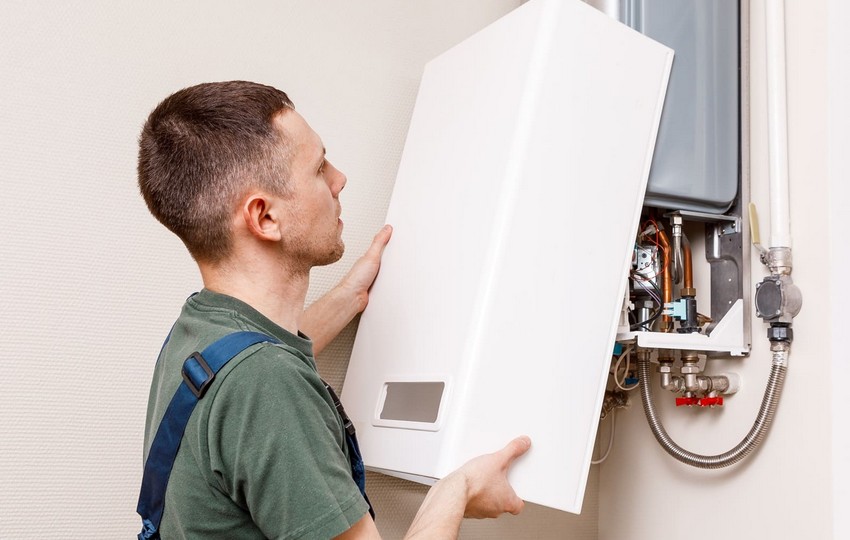
London’s housing stock is as diverse as its population. From Victorian terraces in Islington and Edwardian semis in Ealing to post-war ex-council flats in Tower Hamlets and sleek new-builds in Nine Elms, the capital’s homes share one universal need: reliable heating. Yet for many London homeowners, the boiler remains an out-of-sight, out-of-mind appliance—until it fails in the depths of January, leaving the family shivering and the plumber’s emergency call-out rate draining the bank account. Understanding when to replace your boiler before it reaches this critical point is essential. Knowing the key warning signs can save you money, improve your home’s energy efficiency, and ensure you are never left without heat when you need it most. For those ready to make the change, engaging a reputable Boiler Installation service London is the first step toward a warmer, more efficient home.
The Average Lifespan of a Boiler in London Conditions
Most modern gas boilers have an expected lifespan of between 10 and 15 years, though this can vary significantly depending on the make, model, installation quality, and maintenance history. In London, boilers often work harder than those in milder climates, running for extended periods during damp, chilly winters and frequently providing both central heating and instant hot water to compact, well-insulated flats and draughty period properties alike.
Older properties, which make up a substantial portion of London’s housing market, often have ageing heating systems with original pipework, outdated controls, and boilers that have already exceeded their design life. If your boiler is approaching or has surpassed the 10-year mark, it is time to start monitoring its performance closely. Even if it appears to be functioning, efficiency declines steadily with age. A boiler that was 90% efficient when new may now be operating at 70% or lower, meaning a significant portion of your energy bill is being wasted.
Rising Energy Bills Without Increased Usage
One of the most telling indicators that your boiler is nearing the end of its useful life is a creeping increase in your gas bills. If your usage patterns have remained consistent but your monthly costs have risen noticeably, your boiler is likely working harder to produce the same output. This inefficiency stems from worn internal components, limescale buildup—particularly common in London’s hard water areas—and deteriorating heat exchangers.
While a one-off service may temporarily improve performance, persistent inefficiency usually indicates that the boiler is no longer economically viable to run. Upgrading to a modern A-rated condensing boiler can reduce heating bills by up to 30%, a saving that quickly offsets the initial investment. When you factor in London’s high energy costs, the financial case for replacement becomes compelling.
Frequent Breakdowns and Repair Costs
An occasional fault is normal for any mechanical system, but if you find yourself calling out a heating engineer more than once a year, your boiler is telling you something important. Repeated breakdowns are a clear sign that internal components are failing systematically. The cost of individual repairs—replacement pumps, valves, heat exchangers, and circuit boards—can accumulate rapidly. There comes a point where pouring money into an ageing appliance is simply throwing good money after bad.
A useful rule of thumb is the 50% rule: if the cost of repairing your boiler exceeds 50% of the price of a new installation, replacement is the smarter financial decision. Additionally, sourcing parts for discontinued models can be difficult and expensive, leaving you vulnerable to extended periods without heating. A qualified Boiler Installation service London can assess whether your current unit is worth salvaging or whether a new, reliable system is the more prudent path forward.
Strange Noises, Smells, and Leaks
Boilers should operate relatively quietly. If yours has begun making banging, clunking, whistling, or gurgling noises—often described as “kettling”—this is a serious warning sign. Kettling is typically caused by limescale or sludge buildup on the heat exchanger, which restricts water flow and causes overheating. In London, where water hardness is notoriously high, this is a frequent issue in older boilers that have not been properly maintained.
Yellow or orange pilot light flames, rather than crisp blue ones, can indicate incomplete combustion and potential carbon monoxide production. Any smell of gas or burning should be investigated immediately by a Gas Safe registered engineer. Visible leaks, rust, or water pooling around the boiler casing are also red flags. Not only do leaks damage surrounding décor and flooring, but they can indicate internal corrosion that compromises the boiler’s integrity. In any of these scenarios, replacement is often safer and more cost-effective than repair.
Inconsistent Heating and Hot Water
If your radiators are taking longer to warm up, or if some rooms remain cold while others overheat, your boiler may be struggling to distribute heat evenly. Similarly, fluctuating hot water temperatures—scalding one moment and lukewarm the next—suggest that the boiler is no longer capable of maintaining stable output. These issues can stem from failing diverter valves, degraded thermistors, or an undersized boiler that can no longer meet your household’s demands.
London homeowners frequently extend properties—adding loft conversions, conservatories, or basement rooms—without upgrading the heating system. A boiler that was adequate for a two-bedroom flat may be completely overwhelmed by a four-bedroom house with additional bathrooms. If your home has grown but your boiler has not, it is time to consult a Boiler Installation service London to size a system that matches your current and future needs.
Outdated Controls and Missing Features
Modern boilers are not merely about heating water; they are intelligent, connected systems that integrate with smart thermostats, weather compensation controls, and zoned heating setups. If your boiler lacks compatibility with devices like Hive, Nest, or Tado, you are missing out on significant energy savings and convenience. Smart controls learn your routines, adjust temperatures automatically, and allow remote management via smartphone—ideal for busy London professionals who want to return to a warm home without heating an empty property all day.
Moreover, older boilers often lack modulating burners, which adjust output to match demand rather than cycling on and off at full power. This not only improves efficiency but also reduces wear and tear. If your current system cannot support modern controls, replacement opens the door to a more responsive, economical heating experience.
Regulatory and Environmental Considerations
The UK government is actively phasing out high-carbon heating systems as part of its net-zero strategy. While gas boilers are not yet banned, new-build properties are increasingly required to adopt low-carbon alternatives such as heat pumps. For existing homeowners, there is no immediate legal obligation to replace a functioning gas boiler, but the direction of travel is clear. Energy efficiency regulations are tightening, and incentives for greener systems are expanding.
Replacing an old, inefficient boiler now positions your property ahead of regulatory curves and can enhance its marketability. In London’s competitive property market, a modern heating system with a valid warranty is a significant selling point. Prospective buyers and tenants increasingly scrutinise Energy Performance Certificates (EPCs), and an outdated boiler can drag down your rating and deter interest.
Safety Concerns and Carbon Monoxide Risk
Perhaps the most critical reason to replace an ageing boiler is safety. Carbon monoxide is an odourless, colourless gas that can be fatal. Older boilers with cracked heat exchangers, blocked flues, or failing seals pose a genuine risk. Every London homeowner should have a carbon monoxide alarm installed, but prevention is better than detection. If a Gas Safe engineer identifies safety defects that cannot be reliably repaired, replacement is not optional—it is imperative.
Planning Your Replacement
Timing matters. The worst moment to replace a boiler is during a winter breakdown, when demand for engineers is at its peak and you have no time to research options. Spring and early autumn are ideal windows for planned replacement. You can obtain multiple quotes, compare warranties, and schedule installation at your convenience without the pressure of a freezing home.
When selecting a Boiler Installation service London, verify that the provider is Gas Safe registered, offers comprehensive warranties on both the boiler and the installation work, and conducts a thorough heat loss calculation to ensure correct sizing. London properties vary enormously in their insulation levels, pipework configurations, and water pressure, so a bespoke assessment is essential. Be wary of quotes that seem too low; proper installation by a qualified professional is an investment that pays dividends in reliability, efficiency, and safety.
Conclusion
Your boiler is the heart of your home’s comfort, and in London’s chilly, damp climate, its reliability is non-negotiable. Rising bills, frequent repairs, strange noises, inconsistent heating, and safety concerns are all unmistakable signals that replacement is due. Rather than waiting for a catastrophic mid-winter failure, proactive homeowners should assess their system’s condition, calculate the long-term cost of inefficiency, and plan a strategic upgrade.
Engaging a trusted Boiler Installation service London ensures that your new boiler is correctly specified, expertly fitted, and fully compliant with all regulations. The result is lower energy bills, fewer headaches, and the peace of mind that comes from knowing your home will stay warm and safe, no matter what the British weather throws at you.