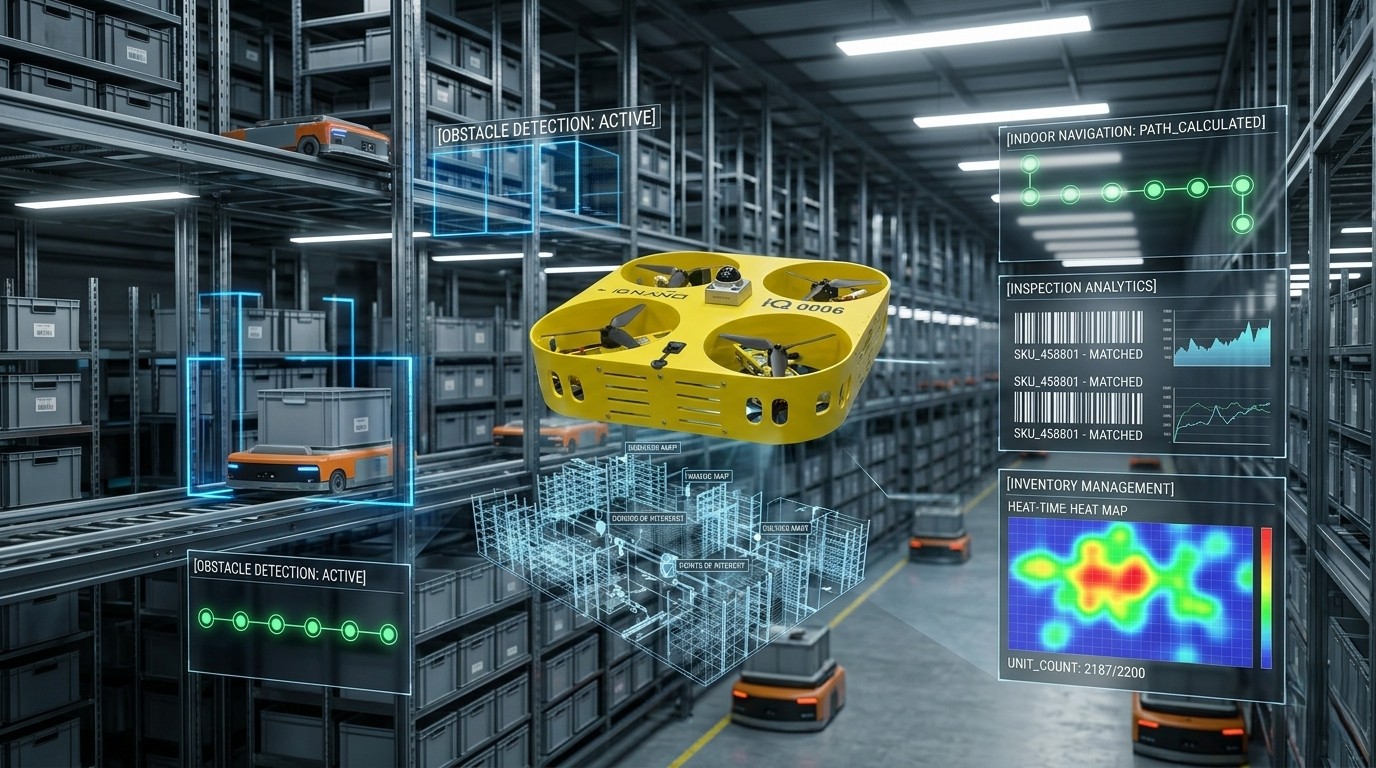
The rapid advancement of drone technology has transformed how organizations inspect facilities, monitor operations, and collect data. While large drones dominate outdoor applications, the Mini Indoor Drone has emerged as a specialized solution designed for confined environments where traditional aircraft cannot operate safely or efficiently.
From industrial inspections and warehouse inventory management to security monitoring and indoor mapping, these compact aerial systems offer exceptional maneuverability and operational flexibility. Their ability to navigate narrow corridors, storage aisles, manufacturing facilities, and hard-to-reach spaces makes them increasingly valuable across multiple industries.
Whether you are looking for an Indoor Drone for Beginners, an advanced inspection platform, or the Best Indoor Drone for commercial applications, understanding the capabilities and features of modern indoor drones is essential.
What Is a Mini Indoor Drone?
A Mini Indoor Drone is a compact unmanned aerial vehicle specifically designed to operate safely within enclosed environments. Unlike larger drones that rely heavily on GPS signals for navigation, indoor drones utilize advanced sensors, cameras, optical flow systems, and obstacle avoidance technologies to maintain stable flight.
These drones are typically lightweight and feature protective frames or propeller guards, reducing the risk of collisions and damage when operating in confined spaces. Key characteristics include:
- Compact size for navigating tight areas
- Stable hovering capabilities
- Lightweight construction
- Advanced indoor navigation systems
- Obstacle detection and avoidance
- High-quality imaging and video capture
As organizations continue to digitize operations, the demand for reliable indoor drone solutions continues to grow.
Why Indoor Drones Are Becoming Essential
Modern facilities often contain areas that are difficult, expensive, or dangerous for personnel to access. An Indoor Drone provides a safer and more efficient alternative. Instead of using ladders, scaffolding, or lifts, operators can deploy a drone to gather visual information within minutes. Common benefits include:
- Improved worker safety
- Reduced inspection costs
- Faster data collection
- Minimal operational disruption
- Better documentation and reporting
As a result, industries ranging from logistics to manufacturing are integrating indoor drone technology into daily operations.
Real-World Applications of Mini Indoor Drone Systems
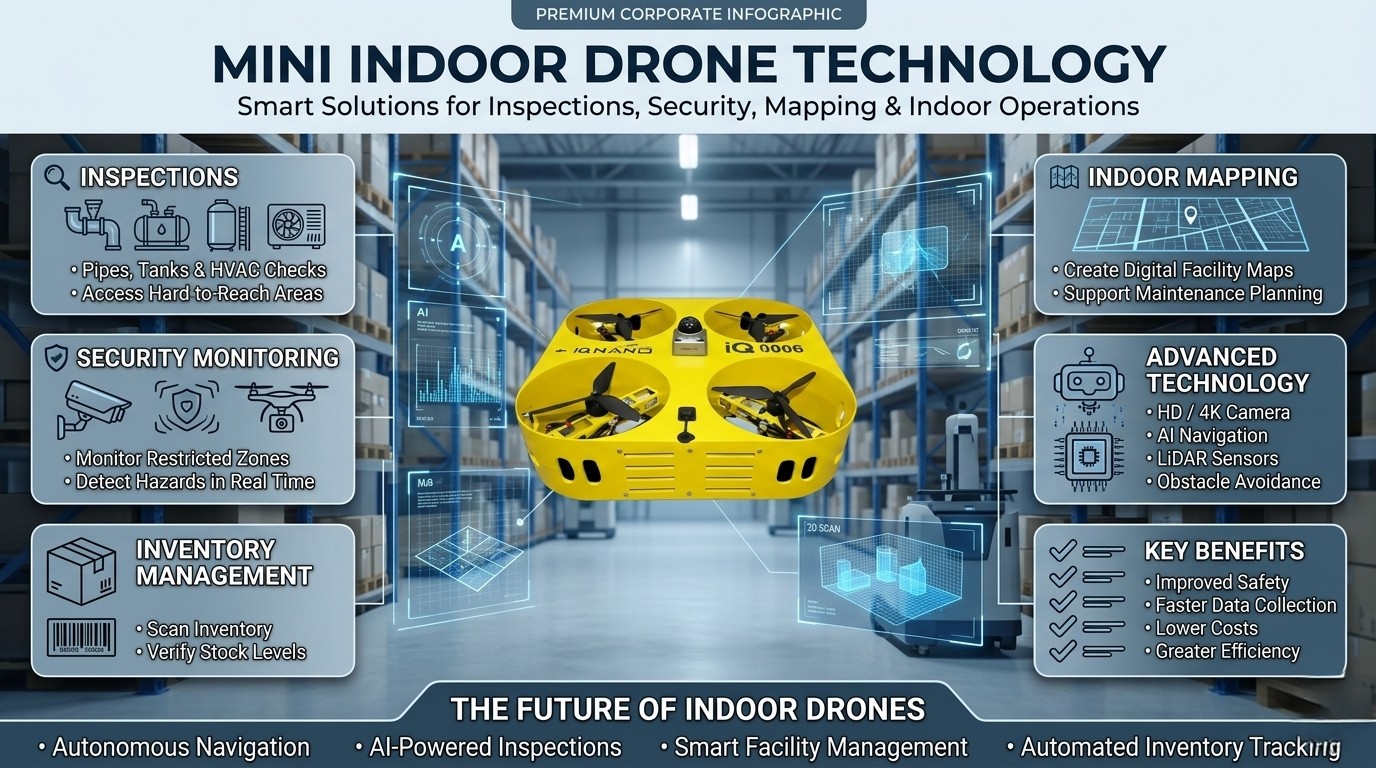
Indoor Inspections
One of the most important applications of a Mini Indoor Drone is facility inspection. Industrial sites often contain:
- Pipes
- Boilers
- Storage tanks
- HVAC systems
- Utility tunnels
- Electrical infrastructure
Inspecting these assets manually can expose workers to significant risks. A drone can quickly access confined areas while capturing high-resolution images and video. For example, maintenance teams can inspect ceiling structures inside warehouses without shutting down operations or deploying expensive lifting equipment.
Navigation in Confined Spaces
Traditional drones struggle in narrow indoor environments. However, a Small Indoor Drone can easily navigate:
- Narrow hallways
- Storage racks
- Utility passages
- Mechanical rooms
- Industrial facilities
This capability is particularly valuable for inspections inside buildings where space is limited and maneuverability is critical.
Safety Monitoring
Safety managers increasingly use indoor drones to monitor workplace conditions. A drone can:
- Identify hazards
- Detect structural concerns
- Monitor restricted areas
- Verify compliance procedures
- Assess emergency situations
Instead of sending personnel into potentially unsafe environments, operators can first deploy a drone to evaluate conditions remotely.
Inventory Management
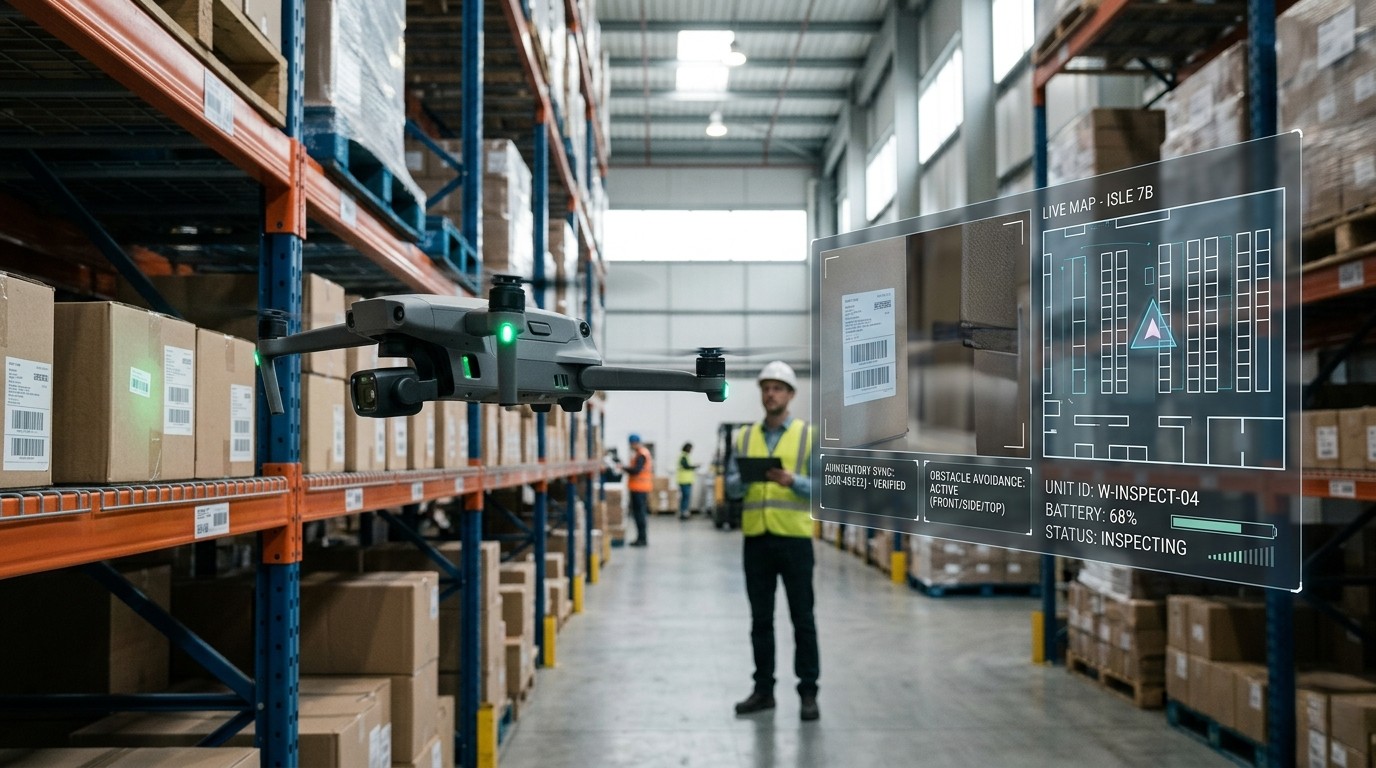
Warehouses are among the biggest beneficiaries of indoor drone technology. Inventory audits traditionally require workers to manually scan products stored on high shelves. This process consumes time and increases safety risks. An indoor drone equipped with cameras and scanning technology can:
- Verify stock levels
- Scan barcodes
- Monitor inventory locations
- Reduce counting errors
- Improve warehouse efficiency
Many modern distribution centers are actively exploring drone-based inventory automation.
Indoor Mapping
Indoor mapping is another rapidly growing use case. A Mini Indoor Drone can generate detailed digital models of:
- Warehouses
- Manufacturing facilities
- Office buildings
- Construction sites
- Industrial plants
These maps support:
- Asset management
- Facility planning
- Maintenance scheduling
- Emergency preparedness
Accurate indoor mapping provides valuable operational insights while reducing manual surveying requirements.
Advantages of a Mini Indoor Drone Compared to Larger Drones
Greater Maneuverability
The compact design of a Mini Indoor Drone allows it to access spaces that larger drones simply cannot reach. This makes it ideal for:
- Tight corridors
- Crowded environments
- Dense infrastructure areas
Enhanced Safety
Smaller drones generally carry less kinetic energy than larger aircraft. As a result, they:
- Reduce collision risks
- Minimize potential damage
- Improve operator confidence
Many indoor drones also include protective cages or propeller guards for additional safety.
Better Indoor Performance
Large drones are primarily optimized for outdoor flight. Indoor drones are engineered specifically for enclosed environments, with specialized navigation technologies that function without GPS signals.
Lower Operating Costs
A Small Indoor Drone typically requires:
- Less maintenance
- Smaller batteries
- Reduced storage space
- Lower training requirements
These factors contribute to a lower total cost of ownership.
Easier Deployment
Indoor drones can often be launched quickly without extensive setup procedures. This enables rapid inspections and faster response times when issues arise.
Indoor Drone with Camera Technology
High-Resolution Imaging
An Indoor Drone with Camera serves as a flying data collection platform. Modern systems can capture:
- High-resolution photographs
- HD video
- 4K video footage
- Inspection imagery
These visual assets help organizations identify issues before they become major problems.
Thermal Imaging
Some advanced indoor drones incorporate thermal cameras. Thermal imaging can reveal:
- Overheating equipment
- Electrical faults
- Insulation issues
- HVAC inefficiencies
This capability significantly enhances preventive maintenance programs.
Live Video Streaming
Real-time video transmission allows operators to monitor environments remotely. Security personnel, maintenance teams, and facility managers can observe conditions instantly without entering potentially hazardous locations.
AI-Assisted Analysis
Many modern camera systems now leverage artificial intelligence to identify:
- Structural defects
- Equipment abnormalities
- Inventory discrepancies
- Safety hazards
These technologies improve inspection accuracy and reduce manual review time.
Obstacle Avoidance and Indoor Navigation Systems
Indoor environments present unique flight challenges. Unlike outdoor drones that can rely on satellite positioning, indoor aircraft must navigate using onboard sensors.
Optical Flow Sensors
Optical flow systems analyze surface patterns beneath the drone to maintain stable positioning. This technology enables:
- Smooth hovering
- Accurate movement
- Reliable navigation
LiDAR Technology
LiDAR sensors create detailed environmental maps using laser measurements. Benefits include:
- Precise obstacle detection
- Improved navigation
- Enhanced collision avoidance
Vision-Based Navigation
Many indoor drones use stereo cameras and computer vision algorithms to understand their surroundings. These systems help drones:
- Recognize obstacles
- Maintain positioning
- Navigate autonomously
Collision Avoidance Systems
Advanced obstacle avoidance systems continuously scan the environment and automatically adjust flight paths. This significantly reduces the likelihood of accidents, especially in crowded indoor spaces.
How to Choose the Best Indoor Drone
Selecting the Best Indoor Drone depends on your intended application.
Flight Stability
Stable flight performance is critical indoors. Look for drones that include:
- Optical flow sensors
- Vision positioning
- Autonomous hovering
These features ensure smoother operation.
Camera Quality
If inspections or monitoring are priorities, choose an Indoor Drone with Camera that offers:
- High-resolution imaging
- Video recording
- Live streaming capabilities
Better image quality results in more valuable inspection data.
Obstacle Avoidance
Reliable obstacle detection is essential for safe indoor operations. Advanced avoidance systems reduce operator workload and improve mission success rates.
Battery Life
Longer flight times increase productivity. Although indoor drones are compact, selecting a model with efficient battery performance helps maximize operational efficiency.
Durability
Indoor environments can be unpredictable. Look for:
- Protective frames
- Propeller guards
- Robust construction
Durable drones generally require fewer repairs and experience less downtime.
Ease of Use
For newcomers, selecting an Indoor Drone for Beginners with intuitive controls and automated flight features can dramatically shorten the learning curve.
Why an Indoor Drone for Beginners Is a Smart Choice
Many people enter the drone industry through indoor flight training. An Indoor Drone for Beginners offers several advantages:
Safer Learning Environment
Indoor environments reduce exposure to:
- Wind
- Weather changes
- External hazards
This allows new pilots to focus on developing flight skills.
Lower Risk of Damage
Small indoor drones generally fly at lower speeds and have protective guards, making accidents less severe.
Easy Skill Development
Beginners can practice:
- Hovering
- Navigation
- Obstacle avoidance
- Precision control
before advancing to more complex outdoor operations.
Affordable Entry Point
Many beginner-friendly indoor drones are cost-effective while still providing advanced features and excellent flight performance.
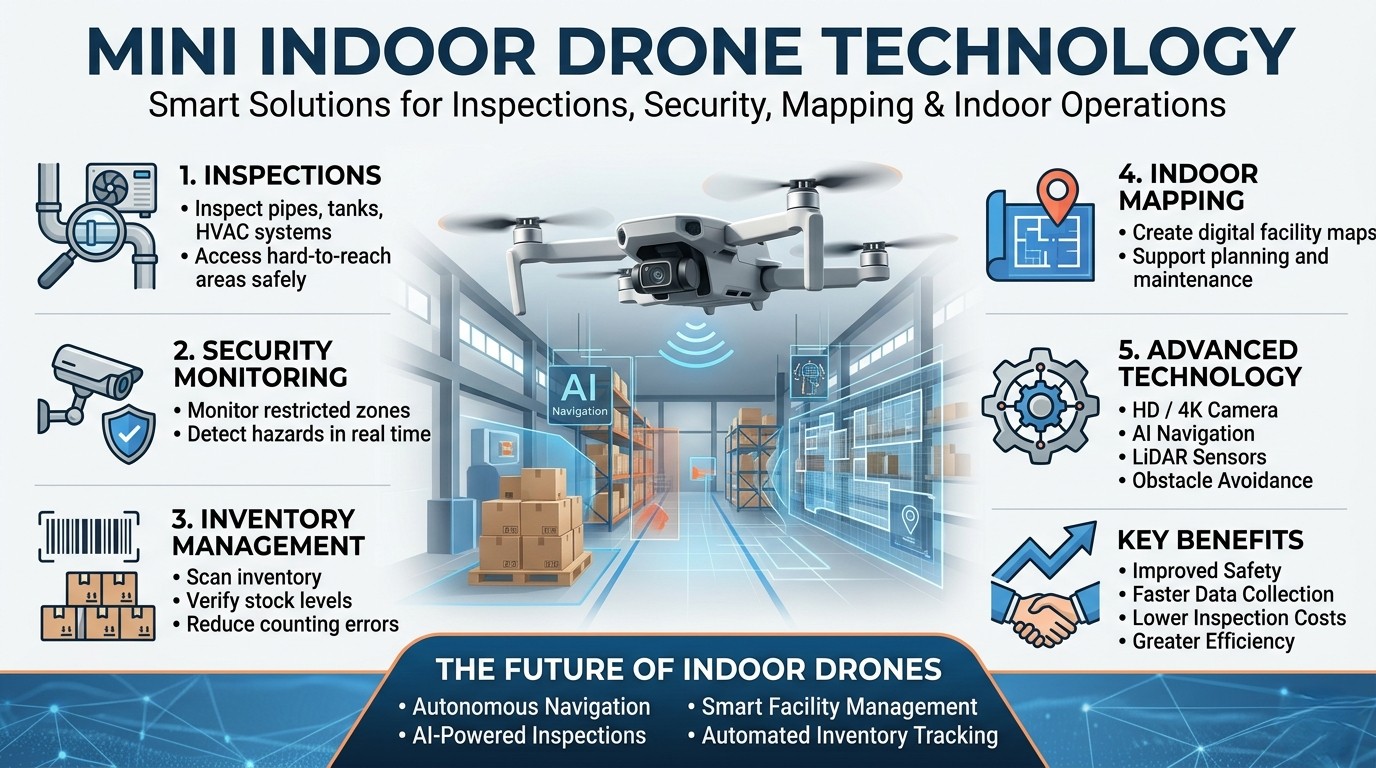
The Future of Mini Indoor Drone Technology
The future of the Mini Indoor Drone market looks exceptionally promising. Emerging technologies include:
- Autonomous indoor navigation
- AI-powered inspections
- Advanced mapping capabilities
- Automated inventory tracking
- Swarm drone operations
As sensors become smaller and smarter, indoor drones will continue expanding their role in industrial automation, facility management, and security operations. Organizations that adopt these technologies early can benefit from improved efficiency, enhanced safety, and more accurate operational insights.
Conclusion
The Mini Indoor Drone has become an indispensable tool for modern facilities seeking safer, faster, and more efficient ways to conduct inspections, monitor operations, manage inventory, and create accurate indoor maps. Its compact design, advanced navigation systems, and intelligent camera technologies allow it to operate effectively in spaces where larger drones are impractical.
Whether used for industrial inspections, warehouse management, safety monitoring, or training new pilots, a high-quality Indoor Drone delivers significant operational advantages. By carefully evaluating flight stability, camera performance, obstacle avoidance capabilities, and ease of use, organizations and individuals can select the Best Indoor Drone for their specific needs and unlock the full potential of indoor aerial technology.
FAQs
What is a Mini Indoor Drone used for?
A Mini Indoor Drone is commonly used for inspections, safety monitoring, inventory management, indoor mapping, facility surveillance, and navigating confined spaces where larger drones cannot operate effectively.
What makes an indoor drone different from an outdoor drone?
An Indoor Drone relies on technologies such as optical flow sensors, computer vision, and obstacle avoidance systems rather than GPS. It is also smaller, more maneuverable, and designed specifically for enclosed environments.
Is an indoor drone with camera useful for inspections?
Yes. An Indoor Drone with Camera allows operators to capture high-resolution images and videos of equipment, structures, and hard-to-reach areas, making inspections safer and more efficient.
What features should I look for in the best indoor drone?
The Best Indoor Drone should include stable flight controls, obstacle avoidance, quality camera systems, durable construction, efficient battery life, and user-friendly operation.
Is an indoor drone for beginners a good way to learn flying?
Absolutely. An Indoor Drone for Beginners provides a controlled environment for learning essential piloting skills, including hovering, navigation, and obstacle avoidance, while minimizing the risks associated with outdoor flight.